
Robotic-assisted surgery is popular choice for hernias
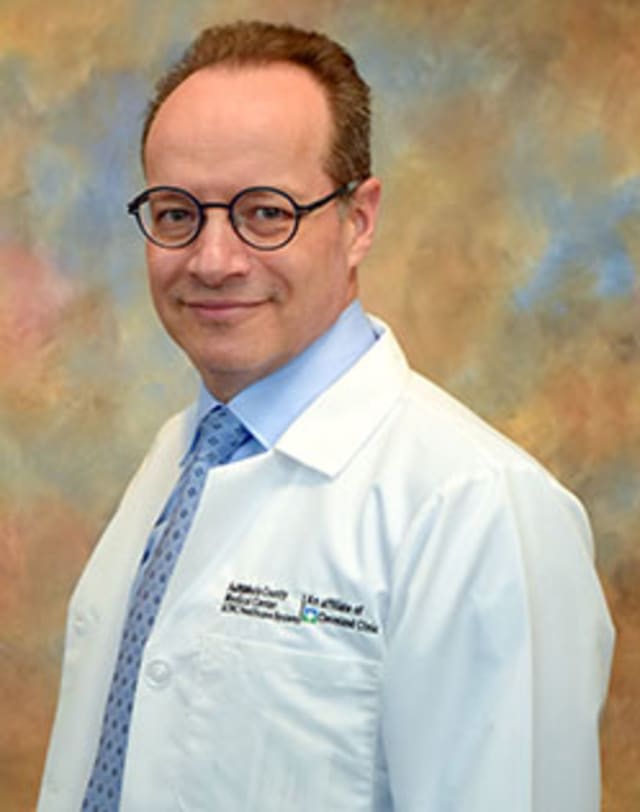
Gordon Bodzin, MD, FACS
General Surgeon
Ashtabula Regional Medical Center
Surgeons at Ashtabula Regional Medical Center have three techniques they can use to repair hernias – open surgery, laparoscopic surgery, and robotic-assisted surgery. Surgeons and patients often prefer robotic-assisted surgery because patients have fewer surgical complications, and say they are back on their feet more quickly than with open surgeries. Patients also say they prefer the smaller scars left after robotic-assisted surgery.
A hernia occurs when an organ pushes through a muscle or tissue wall, usually in the abdomen. There are three main types of hernias:
- Inguinal hernia – Abdominal tissue such as belly fat or intestine pokes through the abdominal wall near the groin. About 75 percent of all hernias are inguinal.
- Hiatal hernia – The top of the stomach pokes through the opening at the diaphragm and into the chest wall. About 20 percent of Americans experience a hiatal hernia (50 percent of these are people over the age of 50).
- Umbilical hernia – Tissue pushes through the abdominal wall near the belly button.
- Ventral hernia – An organ or tissue bulges through the wall of its body cavity, usually in the front abdominal wall.
Other types of hernias include to the side of the abdomen, above the belly button, below the groin, and in the lumbar region of the back.
Most hernias occur when a person is straining – such as lifting, coughing, or laughing. In many cases, a hernia is not an emergency issue. It can be uncomfortable. A person may feel pressure, a pinching pain, or a dull ache. A hiatal hernia may cause chronic acid reflux - a feeling of heartburn or indigestion.
However, a hernia can grow worse over time or suddenly become an emergency health risk. If the tissue does not push back through the hole, it can become stuck and in severe cases the blood flow to the tissue can be cut off, causing it to die.
Patients usually learn about the need for hernia surgery during a visit with their primary care provider, who may recommend an ultrasound or CT scan to determine the location and size of the hernia. Once that is determined, they can make a referral to a general surgeon. When I meet with patients, I review the diagnosis, the patient’s current health, and we talk about surgical options for repairing the hernia.
I’ve been performing robotic-assisted hernia surgeries for more than 11 years. During the surgery, we make very small incisions to insert the camera and instruments into the patient’s body. The robot’s camera lets me see in full 3D detail the tissue pushing through the rupture. The robot’s arms give me better control for pushing the tissue back through the hole and then sewing up the ruptured area. Using the robot, I can perform very complex, difficult hernia surgeries with minimally-invasive techniques rather than one large incision, like we use with open surgery.
Patients who have had both techniques say they are able to return to their daily routine much faster – days instead of weeks – after robotic-assisted surgery. There are usually fewer post-surgery complications and fewer follow-up visits with the surgeon or primary care provider.
Most patients go home the same day as the hernia surgery, unless a complex repair was needed. In those instances, an overnight stay in the hospital is recommended. While patients usually feel better in a few days, we do recommend they limit activity for the first four weeks following robotic-assisted hernia surgery.
By providing the option for robotic-assisted surgery, Ashtabula Regional Medical Center is proving its commitment to help patients stay in their community for healthcare.
ARMC General Surgeon Gordon Bodzin, MD, FACS, sees patients at Ashtabula Regional Medical Center, 2420 Lake Ave., Ashtabula. To schedule an appointment with Dr. Bodzin, please call 440-997-6969.